

Introduction
During the course of his life, Grieg had several unproductive periods due to a chronic illness.
The year 1880 marked the end of one of such periods, and the inspiration came from poet Aasmund Olafsson Vinje, a proud romantic Norwegian nationalist.
Grieg, whose sentiments perfectly aligned with Vinje's, chose 12 poems to set to music as a song cycle. From those 12, Grieg transcribed two of them for string orchestra: Hjertesår (The Wounded Heart), and Våren (The Last Spring).

Edvard Grieg - 1891
Grieg - Two Elegiac Melodies - Analysis
Hjertesår (The Wounded Heart)
Should you need a score you can find one here.
The first melody speaks about the wounds suffered by the heart in the struggles of life. It begins in a very dark C minor, with the melody played by the first violins. Notice the second violins and violas split into 2, while the basses are absent.
The very first note is for the second violins, on a G pedal. The other half of the second violins, in the low register, double the violas on bar 2 while the second half of the violas double the cellos. The parts are moving in contrary motion, a composing trait that goes way back to the origins of counterpoint. Coupled with the register in which these parts are playing, it contributes to a dark sound stirring emotions from the inside.
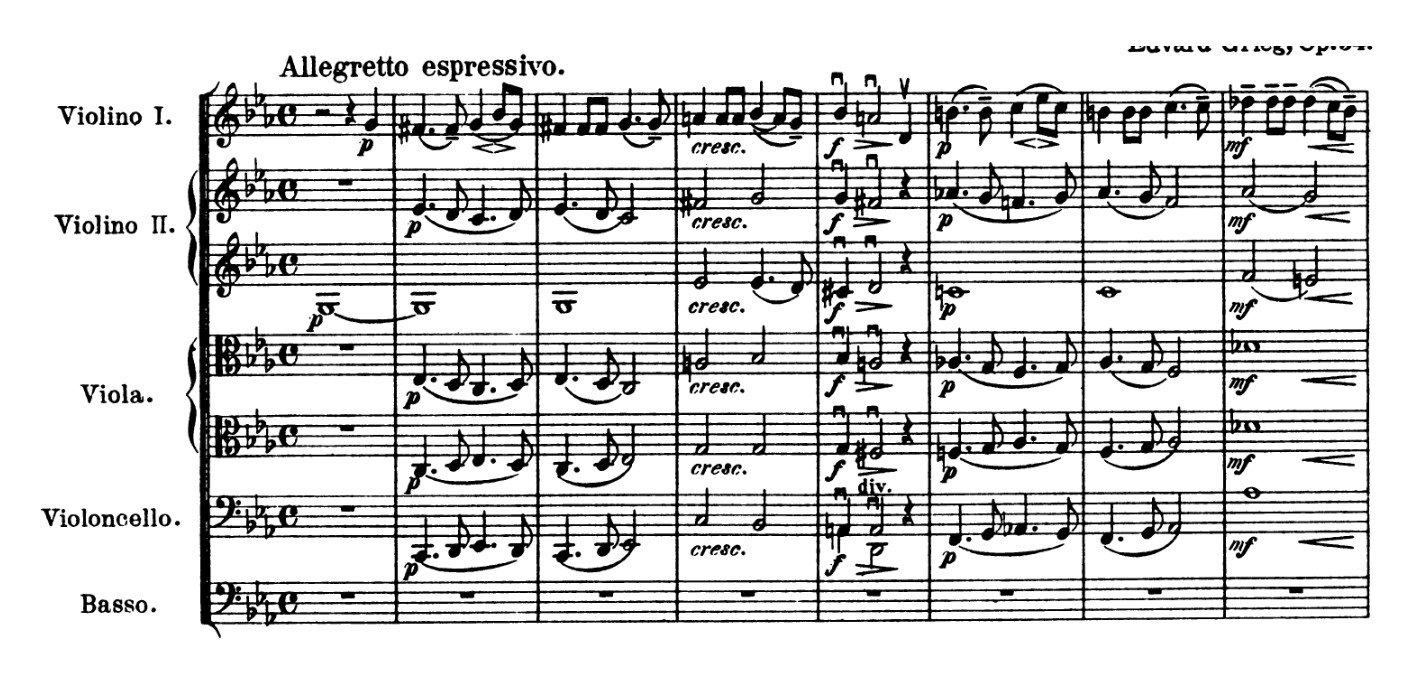
The music hits the breaks for second on bar 5. Notice the 2 downbow markings for everyone, increasing the weight of both notes and creating a natural breath between them while the players lift the bow for the second note. Also, retaking the bow for the second note allows for a long and smooth diminuendo.
The second part of the phrase uses the same elements, moving up in the register and ending up in C major
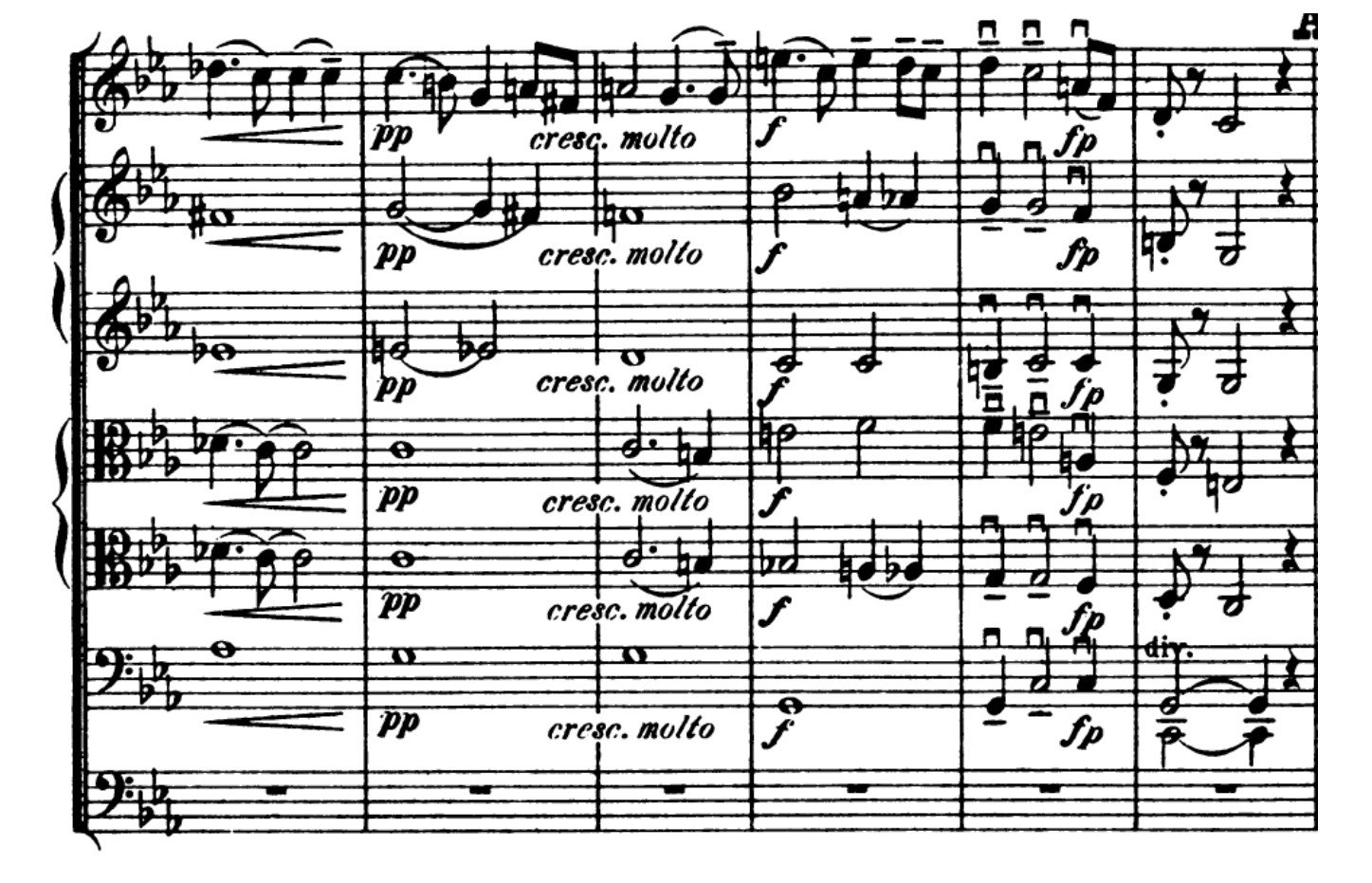
Notice the cellos divisi on the last chord: it adds depth to the sound without too much weight which would come, for instance, by using the basses on the same note.
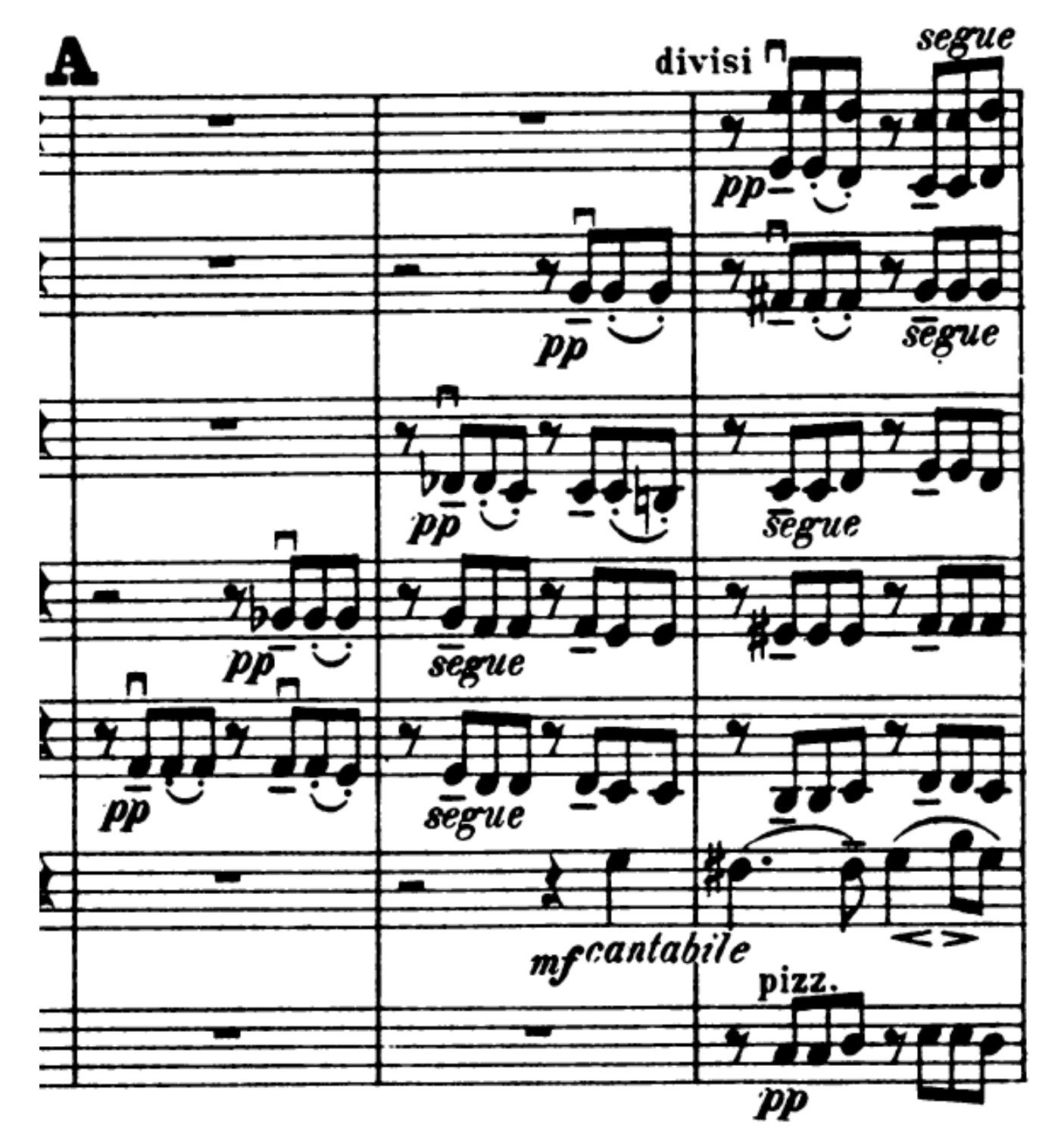
We move to the next verse and the next section: the palpitations of the heart are visible in the repeated eight notes. Each section - or half section - starts at 2 quarters from each other: the second half of the violas, then the first half of the violas, same for the second violins. Everything builds up to the entrance of the line, sung by the cellos. The basses join in in pizzicato, mirroring the first violins in a lower register.
Oops...
This content is available for free with all memberships.
Already a member? Login here.
Not a member yet? Subscribe today and get access to more than 80 videos, scores analysis, technical episodes, and exercises.
Download the eBook (epub format) with the analysis of entire piece.



![Bruckner - Symphony 8 Movement 4 [Analysis]](https://gianmariagriglio.com/wp-content/uploads/2022/04/Bruckner-Symphony-n.8-Analysis.jpg)

0 Comments