
Introduction
Till Eulenspiegel is the name of a young boy in a fairy tale written in 1511. We don't know if he really existed, but in the legend, he was born in a small German village and became a known trickster: someone who played practical jokes on the people in his village. The adults in the village did not like his jokes and when things went too far, Till was arrested, tried, and sentenced to death.
Pretty gruesome, especially if you think this story was meant for children.
But we need to remember in which context these stories were told: fairy tales were often about dwarves, elves, fairies, giants, mermaids, or witches.
Their inherent violent component was meant to teach children the difference between right and wrong and the importance of consequences for bad behavior or bad people.

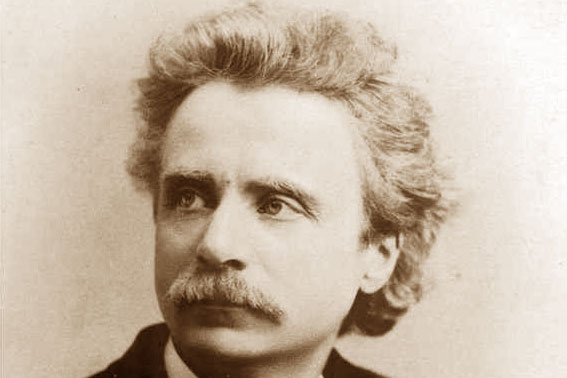
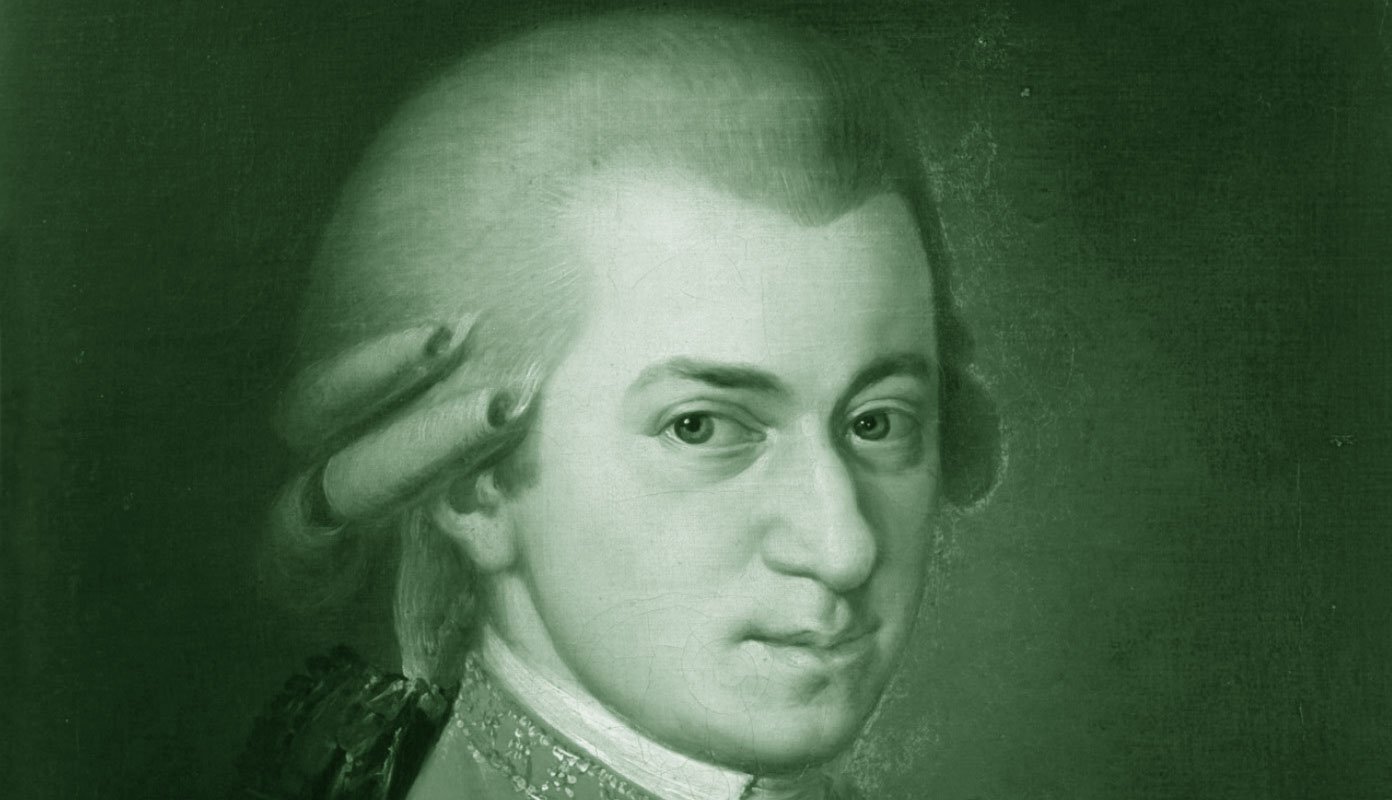
Richard Strauss engraved by Ferdinand Schmutzer (1922)
Sure you've heard of the most famous collectors of these fairy tales: the Brothers Grimm.
Jacob and Wilhelm Grimm collected and published hundreds of such stories including
Hansel and Gretel, Snow White, and Little Tom Thumb, who appearss, for example, in Ravel's Mother Goose Suite.

Structure
The story of Till Eulenspiegel turned into one of Richard Strauss' most popular tone poems. Written in 1894-1895, the frontispiece itself tells us that it is structured as a rondeau.
A rondeau is a musical form where the same motive comes back times again alternating with different episodes. For example, if our motive is called A, a typical rondo structure is ABACAD and so forth, with B C, and D being different episodes.
Incidentally, and out of curiosity, Strauss calls it rondeau, with the French spelling. Originally, this spelling referred to a sung version of this form, dating back to the middle ages, while the spelling rondo referred to the instrumental version. Along the 19th century the 2 spellings came to signify this form in general.
As we'll see this tone poem is more of a rondo with variations where the story can be split into the following sections:
- A: Introduction of the character of Till Eulenspiegel (bar 6)
- B: Till creates havoc in the marketplace (bar 104)
- C: Till impersonates a priest (bar 172)
- D: Till attempts to woo a lady (bar 202)
- E: Till mocks the elders (bar 286)
- F: Till thinks he is unstoppable (bar 422)
- G: Till is sentenced to death (bar 566)
- Coda (bar 625)
Oops...
This content is available for free with all memberships.
Already a member? Login here.
Not a member yet? Subscribe today and get access to more than 80 videos, scores analysis, technical episodes, and exercises.
Opening theme
Should you need a score you can find one here.
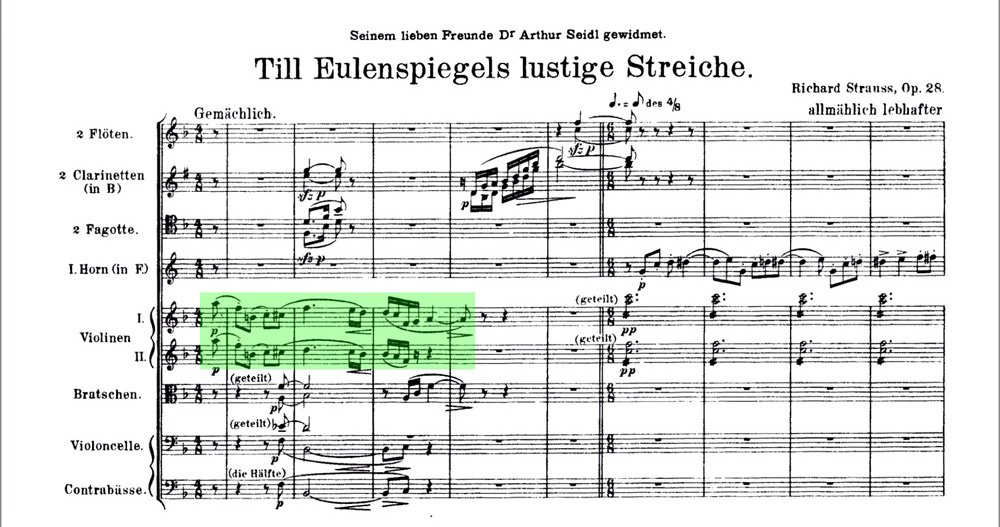
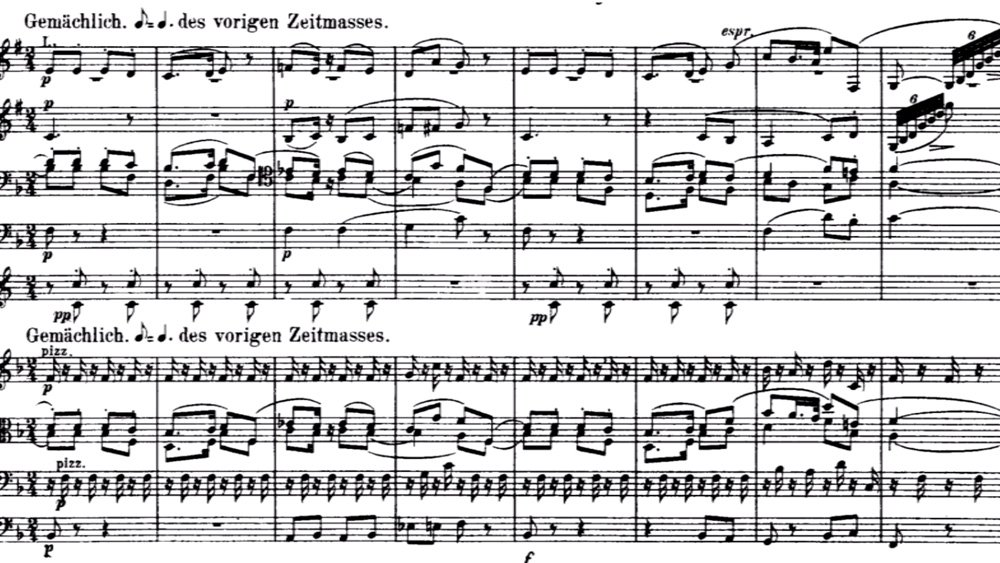
The work opens with a "once upon a time" theme, played by the violins. This theme will come back between episodes, like the calm before Till plays a new prank.
Notice the tempo indication, once more an indication of feeling rather than pace: Gemächlich means comfortably, without rushing.
Till Eulenspiegel's theme
Till Eulenspiegel has his own theme, introduced by the french horn: a slightly tentative melody at first, with unsettling off-beat accents, rising and falling to the lowest notes of the instrument.
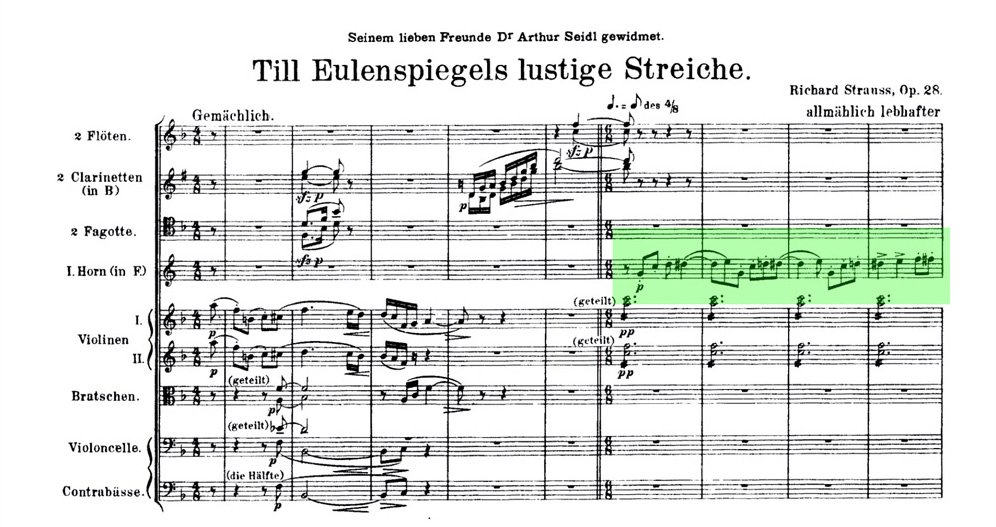
The first 5 notes of this theme will reappear times and again in all sorts of variations.
The theme is retaken by different instruments, from the oboes to the clarinets, and its last part becomes an excuse for a big crescendo
Incidentally, Strauss's father was a horn virtuoso, and Richard seemed to have thought that anything his father could play was the norm. This passage is, in fact, one of the most difficult and perilous solo horn excerpts.
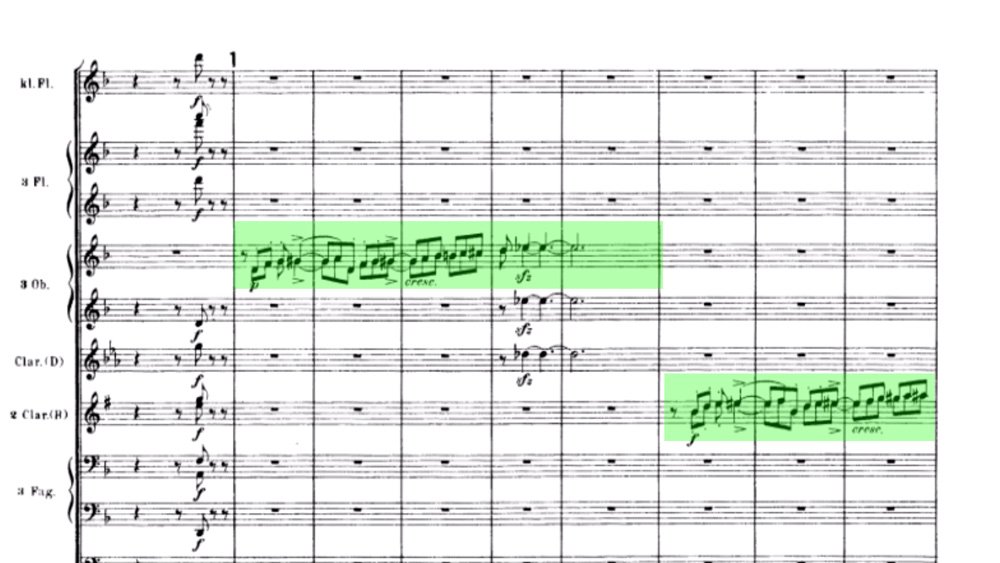
after which the mockery begins with the other Till's motive introduced by the clarinet: it represents Till's laughter as he plots his next prank.
This theme shares the exact same pitches of the opening or, if you prefer, the introduction is a slowed-down version of this theme
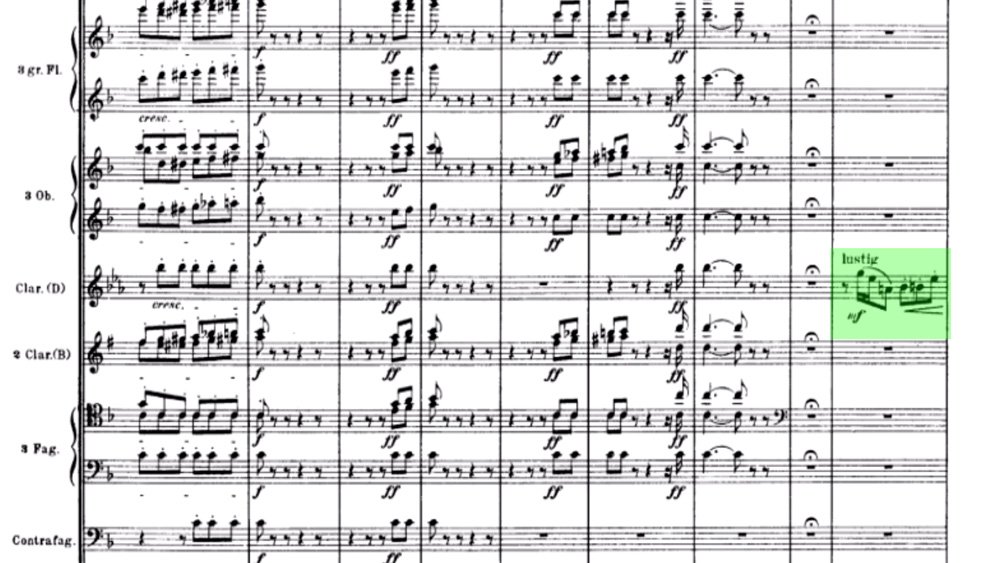
Notice the changes in the dynamics: a clarinet solo in mf, answered by a fortissimo chord of the whole orchestra. The strings drop to a subito piano, crescendo, forte, and piano again. It's a rollercoaster that helps to define the character of Till Eulenspiegel. If that wasn't clear enough, Strauss writes lustig on the clarinet line, underlining the fun and trickster-like character of the music.
Till at the market
The music follows Till throughout the countryside, as he rides a horse through a market, spilling food and goods everywhere: the horse riding is suggested by the rhythm at rehearsal number 3
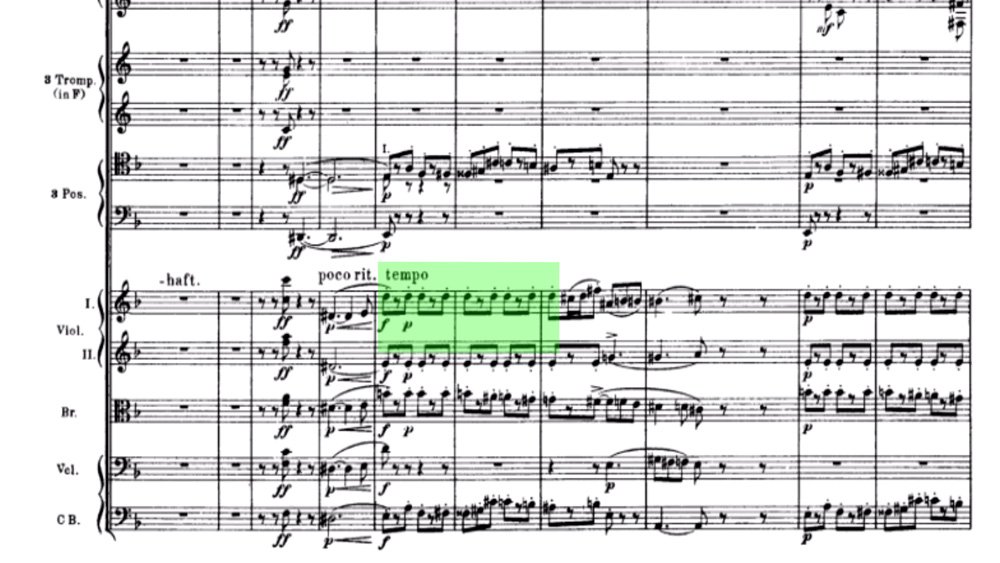
As you may have already noticed, Strauss has a keen interest in chromaticism which you can find all the way throughout the score, in both the melodies and accompaniments.
Till's theme is already being developed and there's a great number of lines intertwining each other. Just look at the head of the theme, transformed in the violins, retaken at the end of the flutes and the D clarinet scale, answered in its downward form by the English horn, clarinets, and bassoons.
Notice the horns part, a version of the theme spread out over 5 bars.
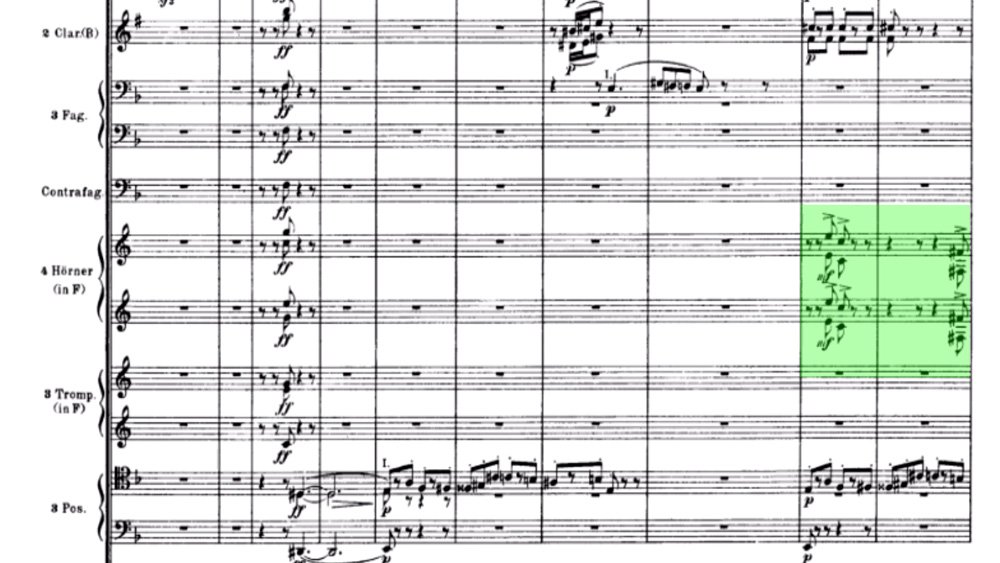
And round and round we go: to the violas, the cellos, the violins with the horns: Strauss plays with the material in a series of practical jokes on the orchestra, bouncing the motive from one section to the other, till we reach a fortissimo
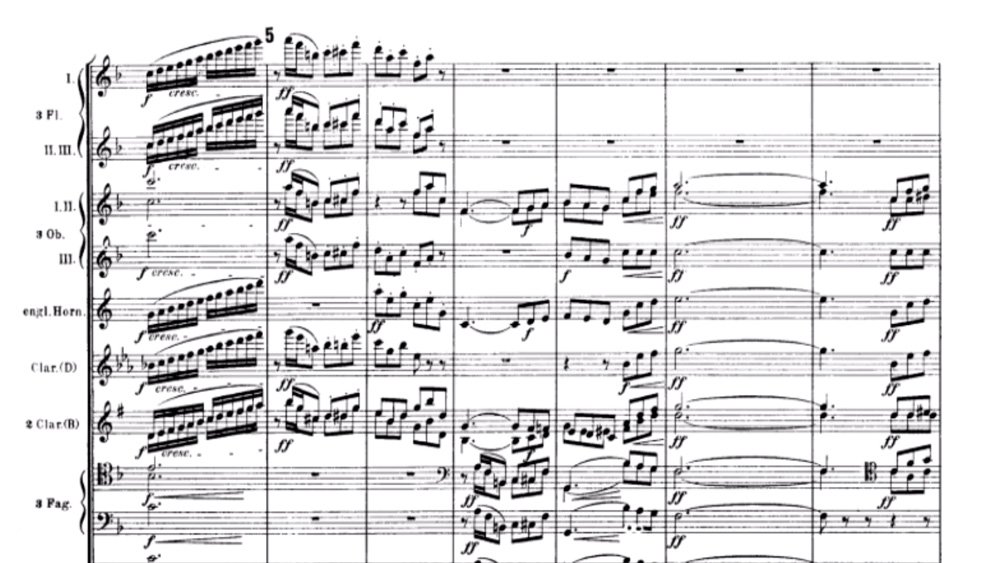
The motive is transformed again and again as Till goes through the market and runs away. Look at number 7: doesn't the flute remind you of someone rushing away from a scene?
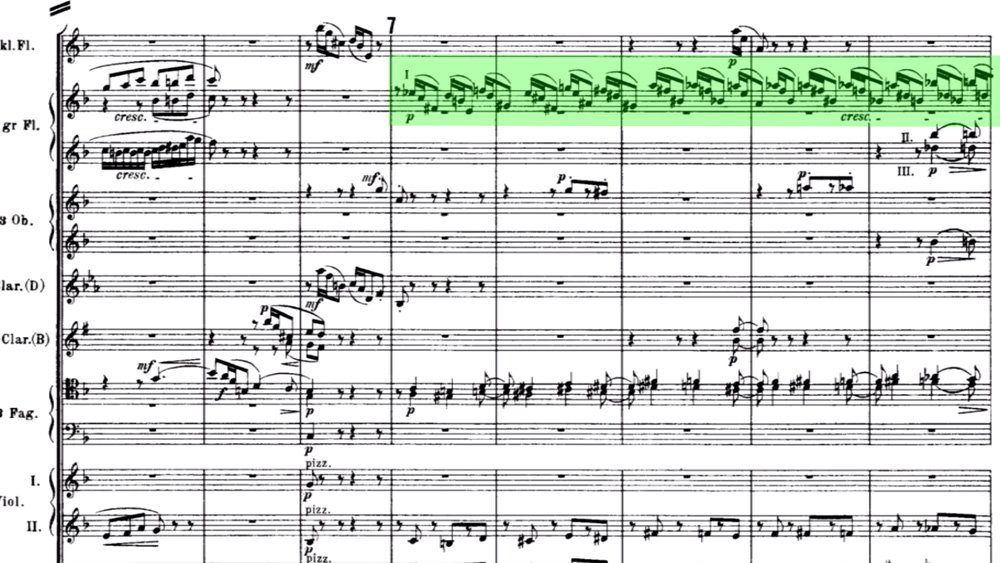
and what about the laughter 4 bars into rehearsal number8?
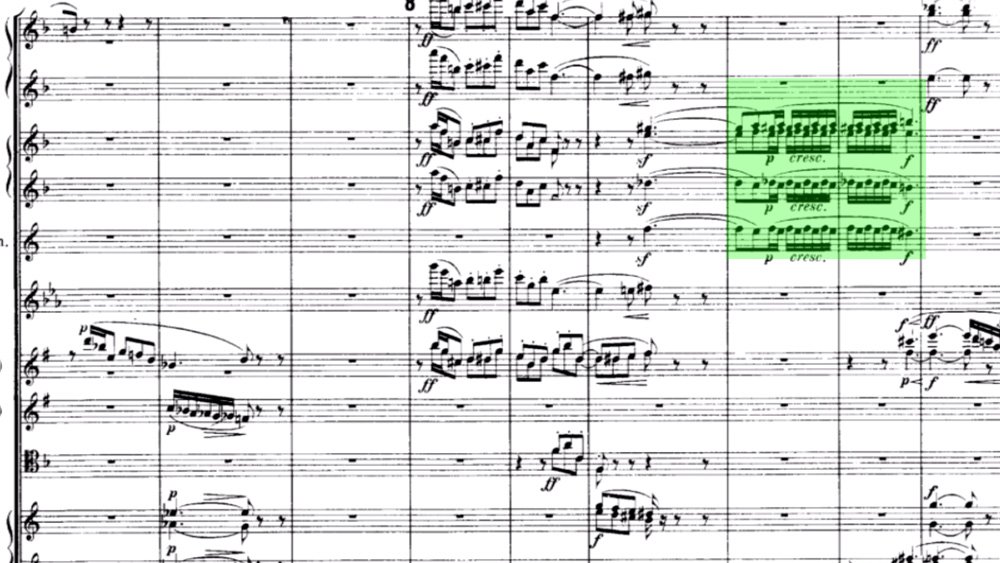
The theme moves to the cellos and basses in yet another form, and then to the flute and answered by the first violins, closing the phrase very gently
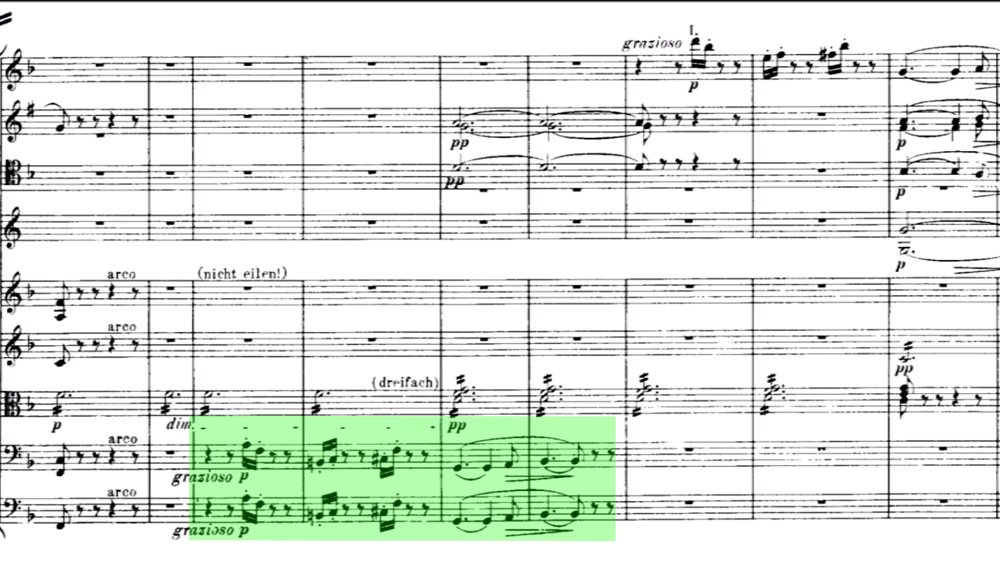
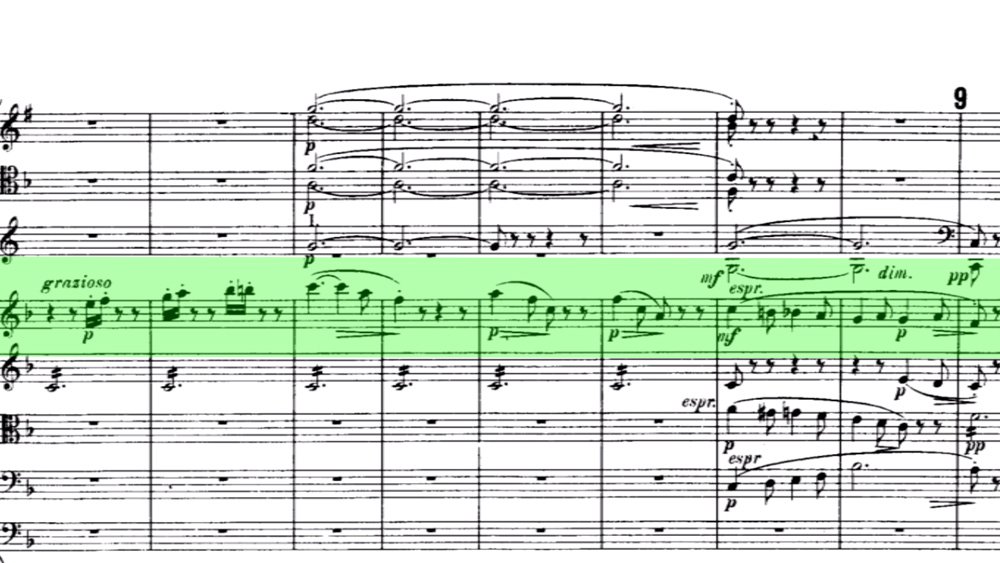
He's spying on someone gossiping in the market. The clarinets' scale shows Till coming in on his horse There's a moment of utter turmoil, with a lot of broken pots and pans, and angry screams of the women. Notice the use of the ratchet
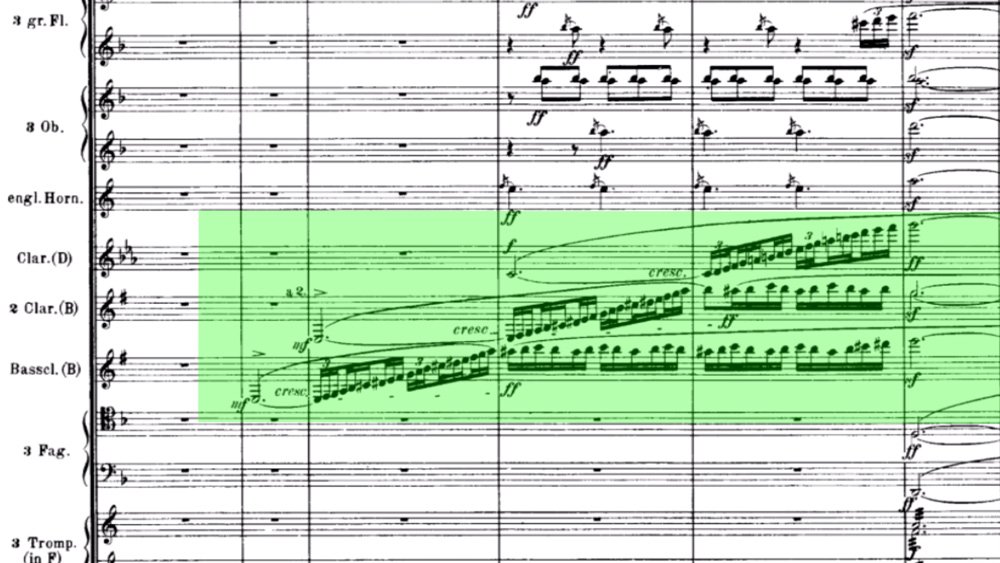
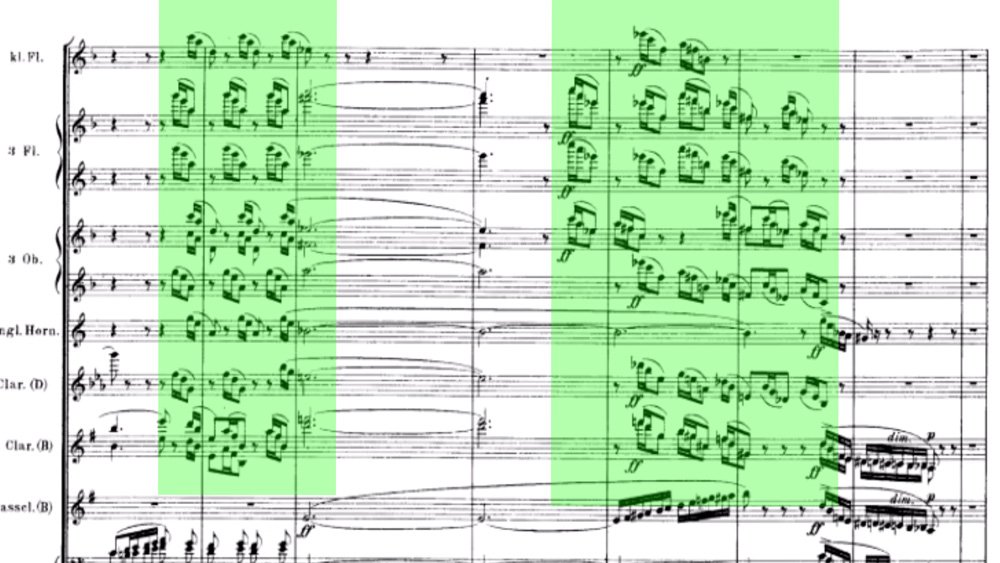
All of this is still a variation. The confusion is generated by the use of the head of the theme in hemiolas in the woodwinds, while the trombones play a slightly slower version of it, and the strings add sweeping scales underneath
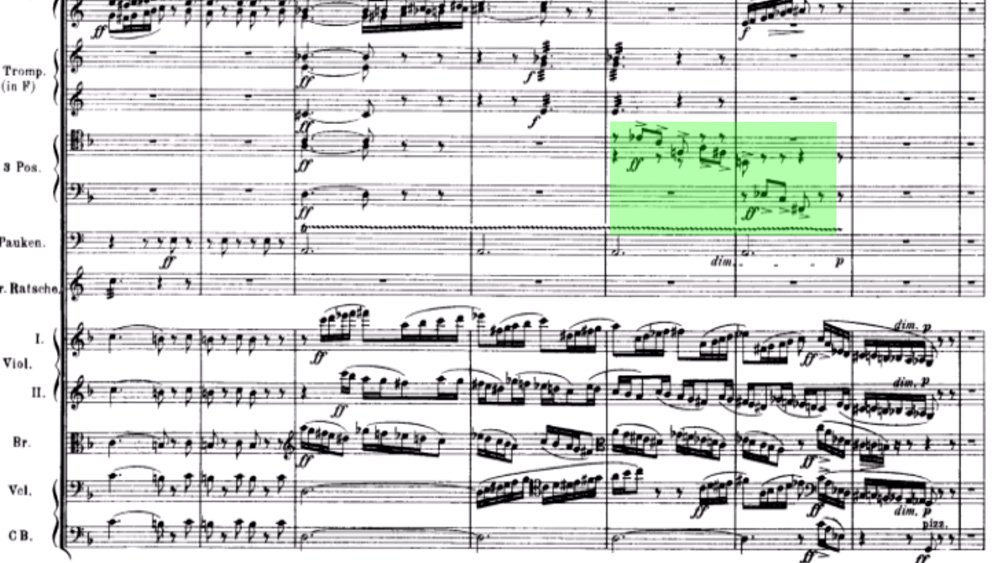
A bar of silence and we hear this echoing in pianissimo and Till starts thinking about his next prank: notice the orchestration, very low, with cellos divisi in 3 on a pizzicato, ending with a rising chromatic scale. The process is repeated through different sections
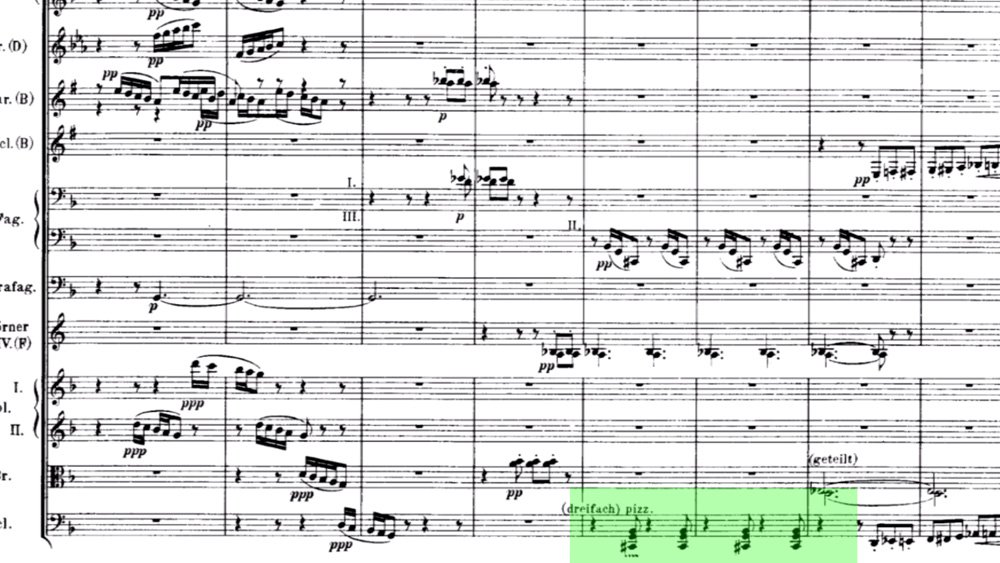
till the idea is hatched: Till will disguise himself as a fat friar and preach to the crowd
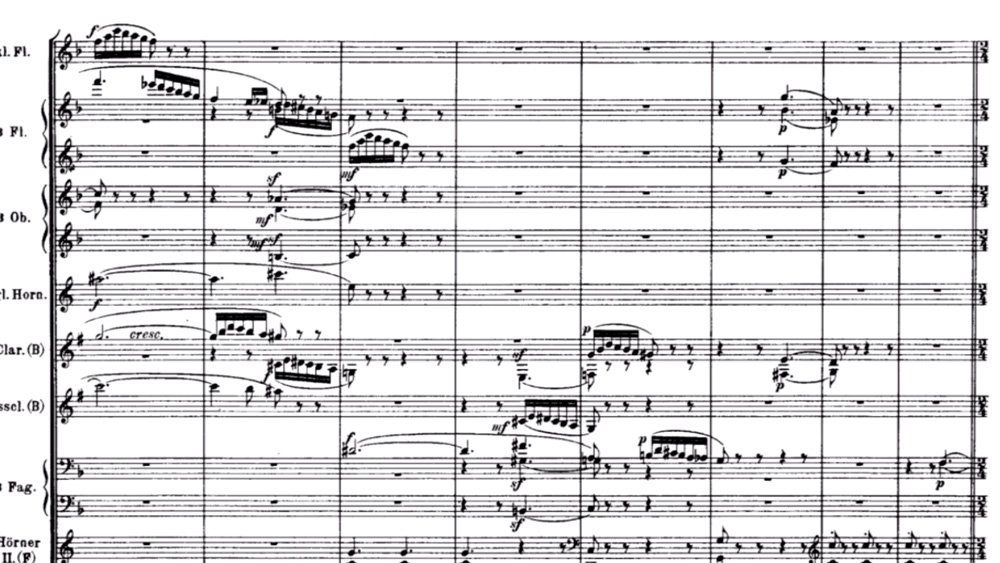
but his true nature reveals in the bass line, at rehearsal number 13, and in the violins right after, interrupted by a mocking clarinet before the phrase closes with a laughter disguised in the chromaticism of the bassoons and violas
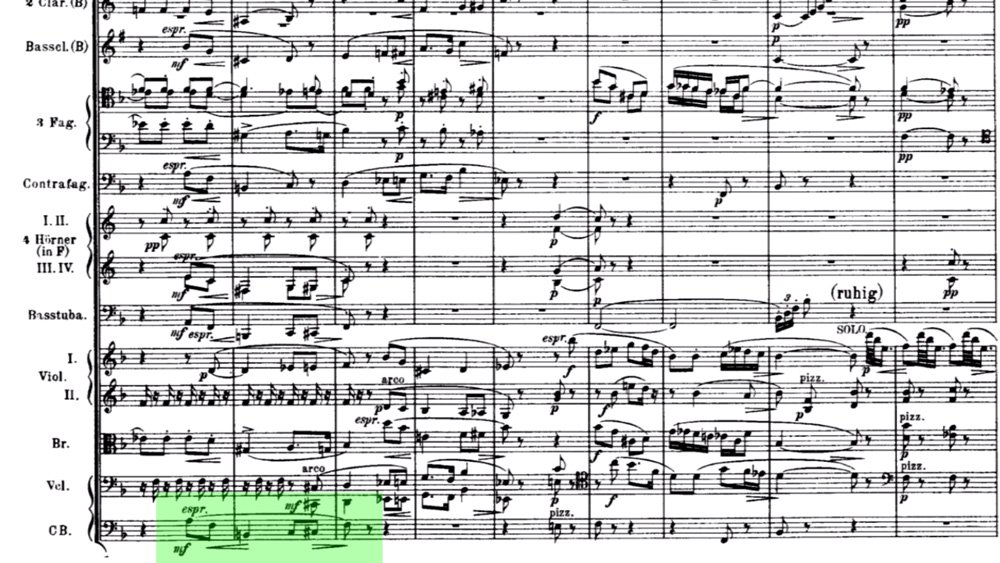
A violin solo reveals a more sarcastic nuance that transforms in a sort of premonition: the music we hear here will come back towards the end when Till is sentenced to death
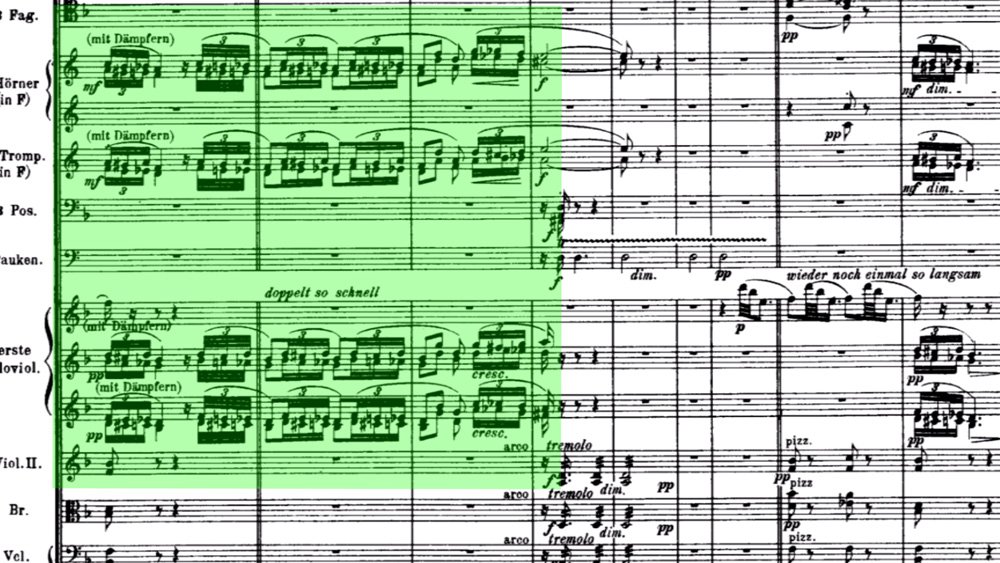
For the time being, Till is safe. The violin solo returns with the same motive, rising up, and falling down with a glissando that introduces his next adventure
Technical tip
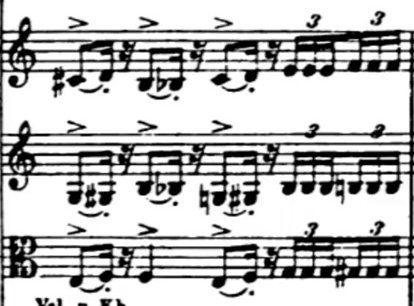
There's no doubt that Strauss' music is very demanding and can be overwhelming, especially at first. The beginning of this piece might not be extremely complex in terms of texture but sure its biggest technical challenge lies in the theme's rhythm.
What you need here is nothing but your wrist movement. The smaller the gesture the clearer it will be.
This bit of advice is also valid in the loudest parts of this piece, the frantic and chaotic tuttis: keep it small and you will gain clarity, which is what the orchestra needs the most in these very difficult passages.

For a technical analysis, take a look at the related video

Till the Don Juan
Till shakes off the death premonition and goes on on another adventure.
He transforms into a Don Juan, exchanging pleasantries with the girls.


One of them really catches his attention. Once again notice the lusciousness of the chromaticism. The theme with which he tries to win her over is marked "with love". And look how languid those dragged glissandos sound
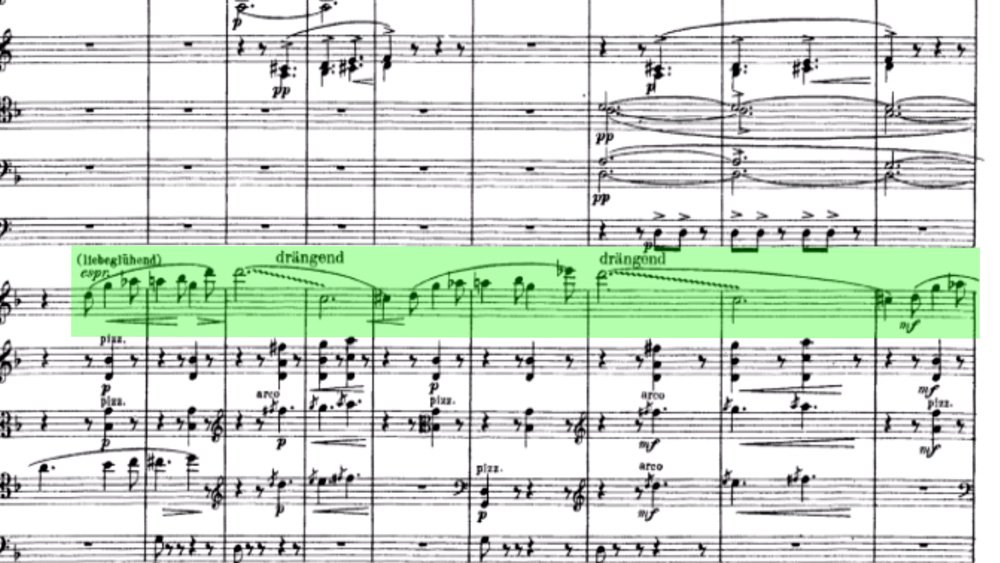
But wait: Till's true nature, once again, cannot be hidden. Look closely at that first violins theme, doubled by the D clarinet, and the flutes. It's nothing but another version of Till's theme we heard at the beginning of the piece, played then by the horn
The lady in question rejects him, making him really angry. It's simply not conceivable that anyone would reject him. It's preposterous. He will have his revenge on the entire female race. The same theme is now much more dramatic and marked furious in the score.
He swears through the brass section playing a stretched version of his mocking theme
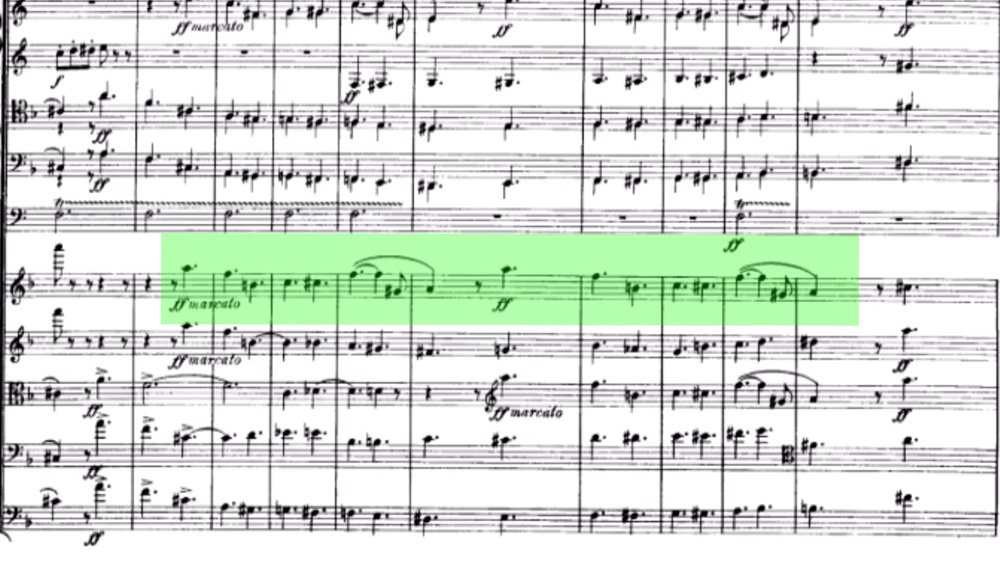
The vengeance motive expands to the entire orchestra ending on the other Till's theme
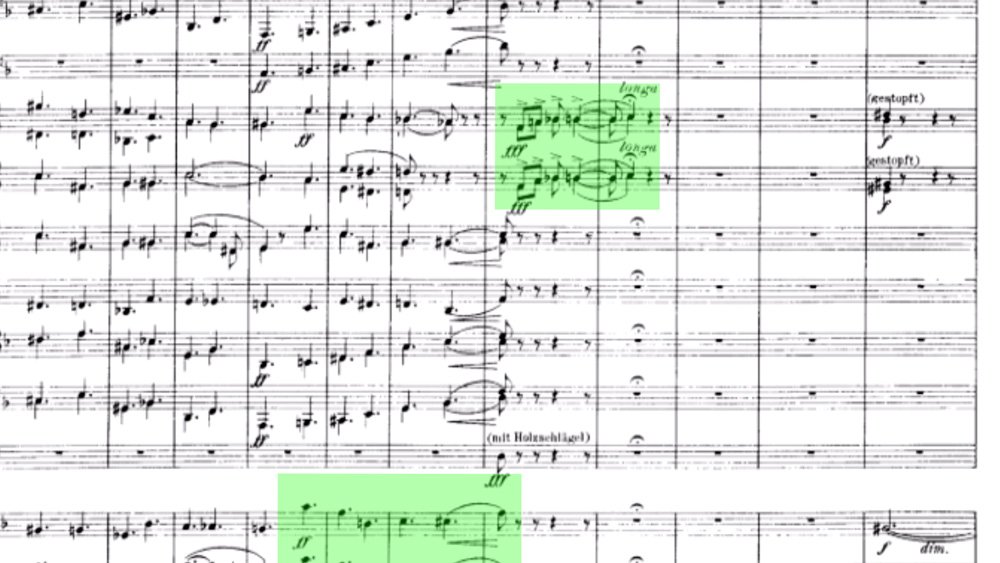
Till and the philistines
The mood changes almost immediately as Till spots the object of his next prank: the philistines. They are portrayed by Strauss with a pompous theme played by the low woodwinds

You can hear Till's mockery as he talks to them through the violins, marked, once again, lustig

The funny thing is that the philistines end up taking him seriously, even discussing his thesis. And what does he do? Mocks them of course!


Till the unstoppable
He eventually bursts out laughing, leaves the philistines to their own devices, and goes off singing a street song. It's a short passage, a connecting bridge to the next section which goes back to the opening theme in a new form.
Notice the theme sneaking in in the bass line 6 before 27 and passed to a combination of English horn, 1 clarinet, 1 horn, and a trumpet ornated by the scales and arpeggios of the clarinet and the violins


And the horn is back, just like the beginning. Well, not quite. We go through a few changes and Till the invincible, the unstoppable, shines through a triumphant march. He even dances about it.

Trial and death
The excitement increases, the music grows and grows and finally Till finds himself in front of a judge

The trial begins and Till is questioned. But he whistles with indifference

The questioning continues, and Till answers again, and again, loudly and with a distorted voice

and then he doesn't answer at all. The brass come back in full blown with a motive that was anticipated earlier

The judge sentences him to death, and he's dragged up on the gallows. The flutes depict his last struggle before dying and his body falls through the trap and remains dangling on the rope
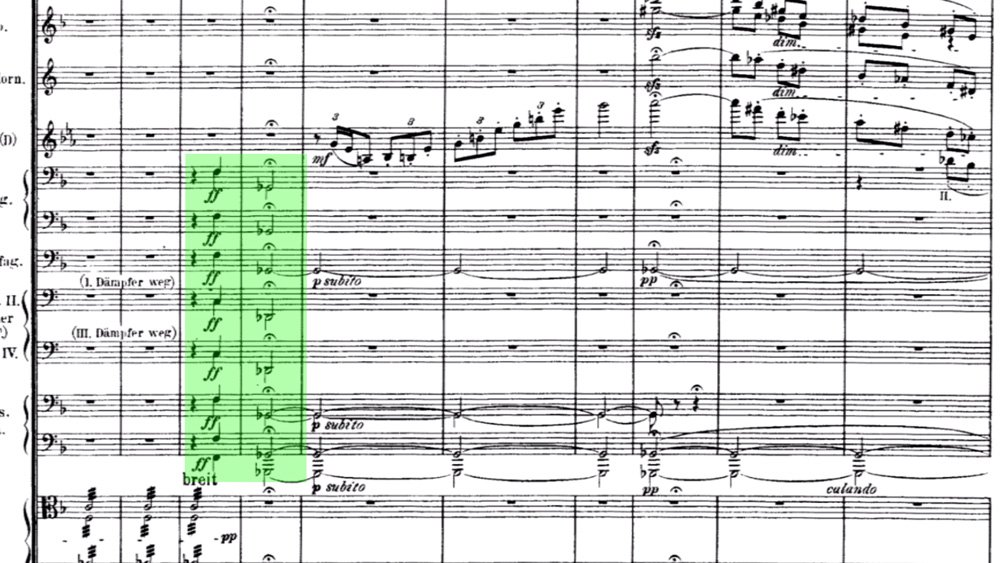

The coda sees the opening material come back. The "once upon a time" idea suggests that such a character cannot really die and in a swift return of the motive, we see Till's mocking us once more
Technical tip
Strauss's music can be very similar to Mahler's in the sense that 2 hands are often not enough to keep up with everything that's going on in the score. Hands independence is therefore essential.
5 bars after number 16, for example, you can register the violins line up and down with your left hand while using your right hand for the other line.
For a technical analysis of selected (risky) spots, look up the technical video


![Bruckner - Symphony 8 Movement 4 [Analysis]](https://gianmariagriglio.com/wp-content/uploads/2022/04/Bruckner-Symphony-n.8-Analysis.jpg)
0 Comments